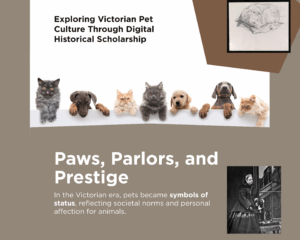
My final project, Paws, Parlors, and Prestige: A Digital Exploration of Victorian Pet Ownership in Britain, is a digital exhibit designed for upper-level undergraduate students and the general public. It examines how pet ownership in nineteenth-century Britain reflected and reinforced ideas about domesticity, class, gender roles, and empire. By curating historical images, primary sources, and interpretive texts, the project shows how pets were not just companions but also cultural symbols woven into the fabric of Victorian identity.
I have completed a portion of the research and digital infrastructure. Due to being on vacation the past week, I have not made as much progress as I would have liked, but I plan to rectify this moving forward. I am still using my discretion and detail to determine what exact images, paintings, and text will be included. These materials will be grouped into thematic sections such as “Imperial Creatures,” “Pets and the Domestic Ideal,” and “The Royal Influence,” each with interpretive captions grounded in both scholarly and public history approaches. The Omeka exhibit site is under construction. I have begun drafting exhibit pages and the infrastructure, and have also been thinking carefully about how to use visual design and structure to guide viewers through the exhibit in a way that encourages historical thinking while remaining accessible.
I plan to finish writing and editing exhibit text in the coming weeks, ensuring clear historical framing and audience engagement. I will also create metadata for each primary source to enhance accessibility and search functionality. I plan to add a brief narrative guide to orient users and incorporate interactive or reflective prompts to deepen user engagement with the material.
Exploring this week’s digital history projects and student reflections offered valuable guidance. The Visualizing Emancipation project reminded me of the power of thematic mapping and data layering to convey historical complexity. While my project is not map-based, the visual logic of that exhibit made me reflect on how to organize my own content so that users can explore patterns across time, class, and imperial geographies. The 1898 War Cartoons exhibit demonstrated how visual culture can communicate subtle and overt ideologies. That project helped me think about the didactic potential of Victorian pet portraits, advertisements, and images that carry layers of social meaning beyond their surface cuteness. Becoming Richard Pryor was especially helpful in showing how localized personal stories can speak to broader historical forces. I will apply this model by including case studies like Queen Victoria’s dogs to reveal broader Victorian values surrounding status and sentiment. Finally, listening to former students reflect on their digital history work reinforced the importance of ownership and creativity in public-facing projects. I appreciated their emphasis on storytelling and their openness about the challenges of translating scholarly knowledge into digital form. Their reflections encouraged me to trust my historical voice and to prioritize narrative clarity and user engagement over exhaustive academic detail.